
Hard Chrome vs. Electroless Nickel: Which Finish Is Right for Your Part?
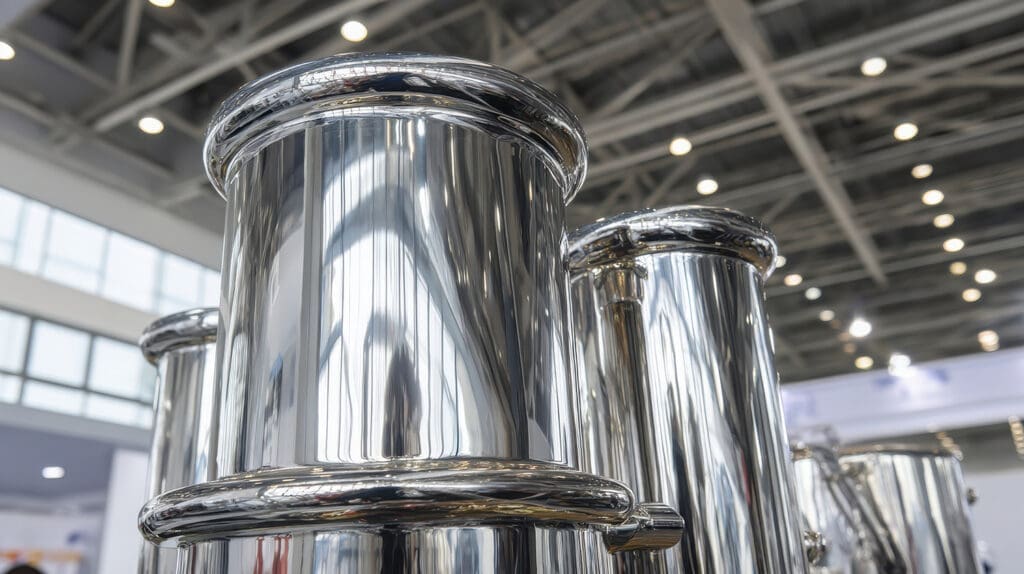
If you are selecting a finish for a worn or damaged industrial component, your choice affects more than just surface performance. It affects how the part fits back into your assembly, how long it holds up in service, and whether you will be pulling it back out for rework weeks later.
Understanding hard chrome vs. electroless nickel from an application standpoint, rather than a chemistry one, gives you a practical framework to make the right call the first time.
What Each Finish Is Designed to Do
Hard chrome plating produces a dense, high-hardness surface that excels under abrasion, sliding contact, and metal-to-metal wear. Abrasion resistance is one of its core strengths, which is why it is widely used on hydraulic rods, shafts, and cylinder components that operate under load and friction. Thickness can be built up to restore worn dimensions, and the deposit is typically finished with post-finish grinding to meet final tolerances.
Electroless nickel plating works differently. Instead of using electrical current, it relies on a controlled chemical reaction that deposits material evenly across the entire part surface, including bores, recesses, and complex geometries where line-of-sight plating cannot reach. That uniform deposition is one of its defining advantages, particularly for coating selection for corrosion, where any exposed area becomes a weak point.
Not sure which category your part falls into? The full comparison between hard chrome and electroless nickel on our finishes page breaks it down in more detail.
Matching the Finish to Your Wear Mode
When you are deciding between hard chrome vs nickel plating, start with how your component is actually failing.
If abrasion, scoring, or surface fatigue from sliding contact is the issue, hard chrome is likely the right direction. The difference between electroless nickel vs hard chrome for wear is measurable: hard chrome carries a hardness advantage that holds up in high-load abrasive conditions. Think hydraulic cylinder rods, guide shafts, or any component where metal-on-metal contact is causing surface degradation.
If your part is failing from corrosive exposure, pitting, or chemical attack, electroless nickel is usually the stronger choice. Because it coats the entire surface without gaps, it removes the initiation points that allow corrosion to take hold. For components with internal passages or complex geometry, complete coverage is difficult to replicate with conventional plating.
For buildup and restoration on worn shafts or bearing surfaces, both processes can recover lost dimensions. Where they differ is in how the thickness requirements factor in. Hard chrome can be applied to heavier builds and ground back to spec, giving you more flexibility for severely worn parts. Electroless nickel deposits at a more controlled rate and often requires less post-machining, making it a good fit when you need near-net dimensional recovery.
Hard Chrome vs. Electroless Nickel Plating: Dimensional Control and Fit
Tolerances and fit often determine the finish, especially in repair and restoration work.
If you need precise dimensional control with grinding to final spec, hard chrome gives you the material to work with and a process built around that kind of finishing. Surface preparation before plating is critical here: substrate condition, cleaning, and pre-inspection all affect adhesion and the integrity of the final deposit.
If your component has tight internal features, irregular geometry, or masking requirements that would compromise consistency in a conventional plating process, electroless nickel is better suited to the job. As dimensional control coatings go, its as-plated uniformity reduces the variation that comes with geometry-dependent deposition.
Which Finish Is Right for Your Part
Neither finish is universally better. Hard chrome vs. electroless nickel is a decision that depends on your specific wear mode, operating environment, part geometry, and tolerance requirements. When you take industrial component repair in the wrong direction, whether through the wrong finish or an incomplete spec review, you end up with rework, missed downtime reduction targets, and a part that still does not perform.
A clear repair vs replacement calculation starts with knowing which finish will actually hold up in your application. Getting that right keeps your equipment running and your production schedule intact.
Ready to Get the Right Finish the First Time?
When your equipment is down or a critical component is worn, the last thing you need is to go through the process twice. Choosing between hard chrome vs. electroless nickel is not complicated when you know what your part actually needs. Match the finish to your wear mode, your environment, and your dimensional requirements, and you are already ahead of the problem.
Hard Chrome Specialists has been helping industrial operations make that call since 1988. Whether you are weighing repair vs. replacement or working through a spec for the first time, our team will review your drawings, environment details, and dimensional constraints and point you toward the right finish before quoting.