
Cylindrical Grinding After Chrome Plating: Why Surface Finish and Geometry Drive Performance
If your operation depends on tight-tolerance components, you already know that getting a worn part back to spec is not as simple as applying a coating and calling it done. Cylindrical grinding after chrome plating is the step that determines whether your component actually performs in service or fails ahead of schedule despite a sound plating job.
The grinding process is what brings the part into final tolerance, corrects geometry, and locks in the surface finish your application demands. Without it, even well-applied chrome plating falls short of what your equipment requires.
Why Chrome Plating Alone Is Not the Final Step
Hard chrome plating builds up surface material to restore a worn or undersized component. That is its job, and it does it well. But the deposit itself is not applied to a finish tolerance. Plating adds stock, and that stock needs to be ground back to the exact geometry and surface finish your application requires.
When your component goes directly into service without post-plate grinding, you risk:
- Dimensional inaccuracy that affects fit and function
- Surface roughness outside the specification your seals require
- Geometric errors, including runout, taper, and out-of-round conditions, that cause uneven loading and premature failure
The grinding process is where dimensional control happens. Without it, your repaired component may still underperform in service.
Surface Finish: A Functional Requirement, Not a Cosmetic One
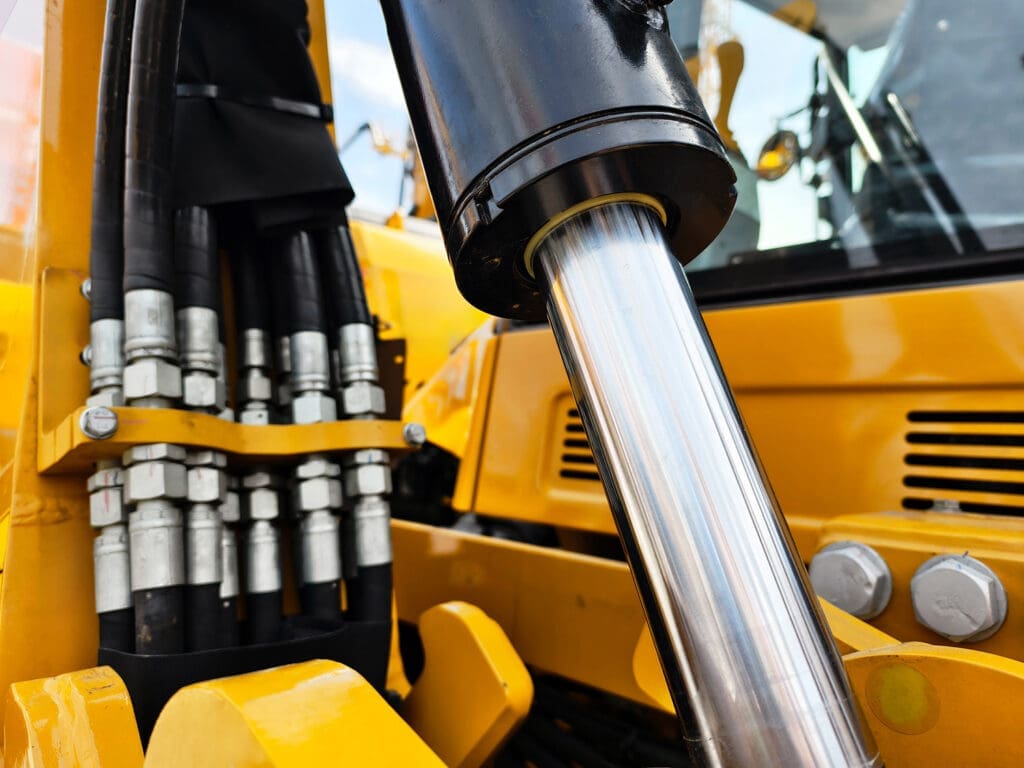
When you specify a surface finish, you are defining how the component interacts with everything it contacts in service. A hydraulic rod running through a seal pack, a mill roll in contact with material, a shaft running in a bearing, each application has a finish requirement that directly affects performance and wear life.
Too rough, and you accelerate seal wear. Too smooth in the wrong application, and you affect lubrication retention. Getting the finish right is not optional; it is a performance specification that your equipment relies on.
At Hard Chrome Specialists, cylindrical grinding is performed to the finish specification your application demands. Whether you are restoring a hydraulic cylinder rod, a pump shaft, or an industrial roll, your component is ground to meet your print, not just brought close.
Geometric Accuracy: Roundness, Cylindricity, and Runout
Surface finish gets attention, but geometry is equally critical. A component that measures on-diameter but runs out of true will still cause problems in the field. The three geometric characteristics that matter most after chrome plating are:
- Roundness: The cross-sectional profile of the part. Out-of-round conditions cause uneven loading on seals and bearings.
- Cylindricity: How consistently the part holds its shape along its full length. Taper or barrel shape causes leakage and uneven contact.
- Runout: How true the part rotates relative to its axis. Excessive runout in rotating components leads to vibration, bearing wear, and seal failure.
Grinding to geometric tolerance, not just diameter, is what separates a repaired part from a restored one. Your equipment performs to the spec of the geometry, and that geometry is set during the grinding process.
The Advantage of Combining Plate and Grind Under One Roof
When plating and grinding happen at two different facilities, you add handoffs, transit time, and accountability gaps. Dimensions can shift between vendors. Communication breaks down. Lead time stretches while your equipment sits idle.
When you source both operations from a single qualified vendor, you eliminate those variables. One shop, one point of contact, one accountability chain from incoming inspection through final grind. Your component goes from worn to spec without leaving the building.
Hard Chrome Specialists provides hard chrome plating and cylindrical grinding as a combined service. Your part is plated and ground to final specification in one location, which means faster turnaround, tighter dimensional control, and a single vendor responsible for the finished result.
For operations teams managing repair schedules and minimizing downtime, that matters. If component reconditioning is part of your maintenance workflow, consolidating the repair process reduces the total time your equipment is out of service.
Who This Service Supports
Cylindrical grinding after chrome plating is used across a wide range of industries and applications:
- Hydraulic cylinder rods and pistons in heavy equipment and construction
- Mill rolls and spindles in hot mills and forming operations
- Pump shafts and bearing surfaces in industrial production
- Barrels and precision bores in firearms manufacturing
- Pivot pins and lift arms in agricultural equipment
- Crusher shafts and conveyor components in quarry operations
If your operation depends on components that rotate, reciprocate, or maintain a close-tolerance fit, this process applies to your work.
Ready to Get Your Component Plated and Ground to Specification?
Your worn or damaged component needs to come back to print. Cylindrical grinding after chrome plating gives you the complete repair path: restored wear resistance, dimensional accuracy, and the surface geometry your application requires, all handled by a team that performs both operations in-house.
Hard Chrome Specialists has been providing industrial plating and precision grinding services since 1988. When your equipment needs to get back in service, you get faster turnaround, less vendor coordination, and tighter results. Request a quote and let us know what you are working with.