
Protect Your Line with Electroless Nickel Plating for Food-Grade and Sanitary Equipment

If you run a food, beverage, dairy, or pharmaceutical operation, you know how much pressure your equipment is under.
Pumps cycle constantly. Valves open and close thousands of times per shift. Shafts and fittings face repeated exposure to washdown chemicals, food acids, and aggressive cleaning agents.
When a component fails, you’re not just replacing a part. You’re losing production time, and depending on the failure, you may be facing a compliance issue too.
Electroless nickel plating for sanitary equipment is one of the most practical ways to protect your components, extend their service life, and reduce the frequency of costly interventions. Here’s what you need to know.
Why Sanitary Environments Break Down Standard Components
Food processing environments are uniquely harsh. Washdown cycles run multiple times per shift using caustic cleaners, sanitizing agents, and high-pressure water.
Acidic products like beverages, dairy, and fermented goods contact metal surfaces directly or indirectly over time. That combination eats away at base materials, promotes corrosion, and creates surface roughness that traps bacteria.
Standard steel and even stainless components can pit and corrode under repeated chemical exposure. When that happens, you’re not just dealing with wear. You’re dealing with a contamination risk.
What Makes Electroless Nickel Plating for Sanitary Equipment Effective
Unlike other plating processes that rely on electrical current, electroless nickel uses a chemical reduction reaction to deposit a uniform nickel-phosphorus alloy across the entire part surface.
That includes internal bores, recesses, threads, and complex geometries that other methods can’t reach evenly.
The result is a consistent coating thickness across the whole part, not just the flat surfaces. That uniformity is what makes it so well-suited to components operating in demanding environments.
Here are the properties that matter most in your application:
- Corrosion resistance. The nickel-phosphorus alloy resists caustic cleaners and organic acids common in washdown cycles. High-phosphorus formulations perform even better in highly acidic conditions.
- Wear resistance. Pump shafts, valve stems, and agitator shafts face constant mechanical stress. The hardness of the deposited layer reduces surface wear and extends part life.
- Smooth, uniform surface. A consistent nickel coating is easier to clean and harder for biofilm to grip, which directly supports sanitation and compliance goals.
- Dimensional accuracy. Because the deposit is predictable and even, you can plate to a precise thickness without overshoot. That matters on parts with tight tolerances.
Electroless Nickel Plating Food Grade Applications and Compliance
If your operation falls under FDA or USDA oversight, the materials contacting or adjacent to food products need to meet specific standards.
Electroless nickel plating food-grade applications, when specified at the right phosphorus content and coating thickness, are used across food-contact and food-adjacent components throughout the industry.
That said, compliance depends on your specific process, the parts involved, and your regulatory environment. We’re not making blanket compliance claims here.
What we will tell you is that when you’re under audit, documentation matters. You need a plating shop that understands the specs, tracks the process, and delivers repeatable results every time.
Components That Benefit Most
If you’re working out where this service makes the most sense in your facility, here are the components that come through most often:
- Pump shafts and housings
- Valve bodies and stems
- Agitator shafts and blades
- Fittings and couplings
- Molds and dies used in production
- Conveyor components in wet environments
These are parts that take the most chemical exposure, mechanical wear, or both.
Replating worn components instead of replacing them can cut your maintenance costs substantially, especially on custom or long-lead-time parts.
Repair vs. Replacement: Ask This Question First
The most common conversation we have with operations managers and maintenance teams comes down to this: replace or restore?
Replacement sounds straightforward until you factor in the lead time on a custom shaft or specialty housing.
Electroless nickel plating lets you restore a worn part back to spec, often at a fraction of the replacement cost and faster than sourcing a new one.
If the substrate is in good condition and the geometry is salvageable, replating is almost always worth evaluating before you cut a purchase order.
We’re experienced in stripping, re-prepping, and replating components that have seen years of service in aggressive environments. If you’re not sure whether a part is a good candidate, we can take a look and give you a straight answer.
Work With a Shop That Knows Sanitary Applications
Not every plating shop understands what’s required in food-grade or pharmaceutical environments.
The wrong process parameters, incorrect phosphorus content, or uneven coating thickness can undermine the performance you’re counting on.
At Hard Chrome Specialists, we’ve been in metal finishing since 1986. We’re ISO 9001-registered, and we work with operations teams that need reliable results, consistent quality, and fast turnaround.
Whether you’re dealing with a failed component or planning proactively, we’re here to help you keep production running.
Ready to Keep Your Sanitary Equipment Running Longer?
Electroless nickel plating for sanitary equipment isn’t a luxury. It’s a practical, proven solution for operations dealing with repeated component failures, washdown damage, or surface condition concerns.
The right coating extends part life, reduces your maintenance cycle, and keeps your line running longer between interventions.
If you’ve got a component that’s worn, corroded, or due for replating, don’t wait until it shuts your line down. Request a quote today and let’s find the right solution for your equipment.
Electroless Nickel Plating Thickness: How to Choose the Right Specification
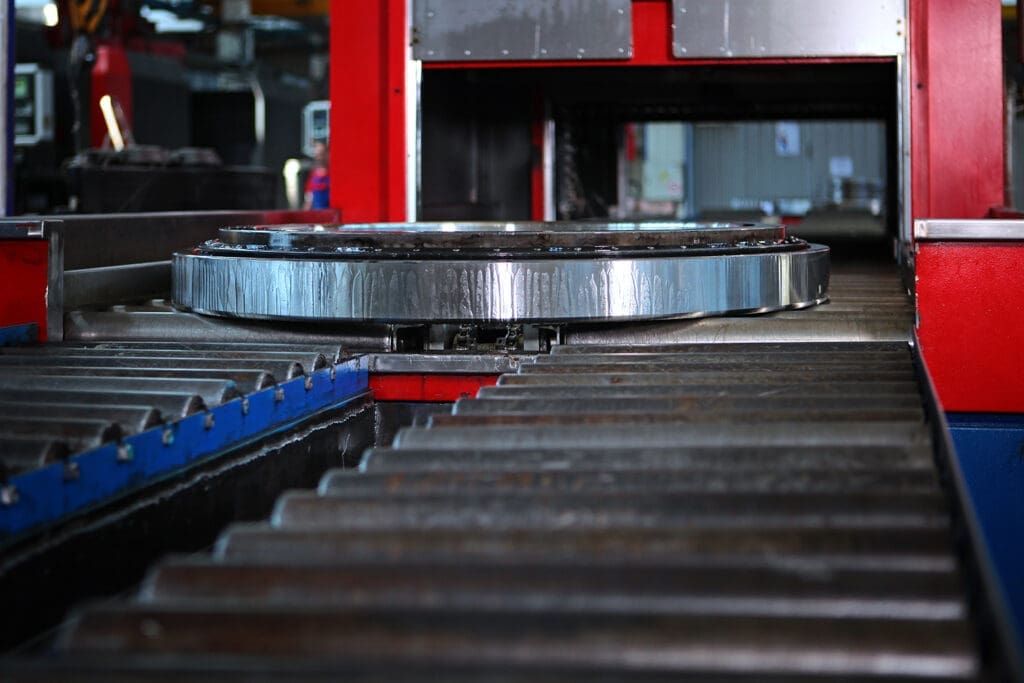
Specifying the wrong electroless nickel plating thickness can cost you more than a rejected part. It can mean premature wear, failed inspections, scrapped tooling, and unplanned downtime that ripples through your entire production schedule. Whether you are sourcing a coating for a hydraulic component, a precision mold, or a food-grade roller, getting the thickness right is not optional. It is the difference between a part that performs and one that fails before its time.
This guide covers the key factors behind electroless nickel plating thickness, the industry standards that govern it, and how to match the right specification to your application.
What Is Electroless Nickel Plating and Why Does Thickness Matter?
Electroless nickel plating is a controlled chemical deposition process that applies a uniform nickel coating to a metal substrate without the use of electrical current. Unlike electroplating, which can produce uneven buildup on complex geometries, electroless nickel deposits at a consistent rate across all surfaces, including recesses, bores, and sharp edges.
That uniformity is one of the process’s greatest strengths. But it also means every thickness decision carries real weight. Every micron you specify is intentional. There is no excess to hide behind or grind away without losing dimensional accuracy.
For components with tight tolerances, the relationship between deposit thickness and finished dimensions must be calculated before plating begins. Over-specifying adds cost. Under-specifying costs you performance, and often, the part itself.
Key Factors That Determine the Right Plating Thickness
Before settling on a thickness class, work through these four variables.
1. Service environment
Is the component exposed to moisture, chemicals, or corrosive media? Parts operating in aggressive environments need thicker deposits to maintain barrier protection throughout their service life. Corrosion resistance is a primary driver for many industrial plating decisions.
2. Wear resistance requirements
High-cycle wear applications, such as hydraulic actuator rods or guide rails, need heavier deposits to withstand repeated contact. Thinner coatings may be sufficient for static or low-wear scenarios where surface protection is the primary goal.
3. Dimensional tolerances
Electroless nickel plating builds on all surfaces simultaneously. If your component has a bore diameter tolerance of plus or minus 0.0005 inches, your coating thickness specification directly affects whether the part fits at assembly. Communicate your tolerances before plating begins, not after.
4. Substrate material
The base metal affects both adhesion and how the coating performs in service. Aluminum alloys, for example, require specific pretreatment to achieve acceptable adhesion and may influence the maximum practical deposit thickness. Steel, stainless, and copper-based substrates each carry their own process considerations.
Industry Standards: ASTM B733 and MIL-C-26074
Two specifications govern most industrial electroless nickel plating work in the United States.
ASTM B733 defines six thickness classes for electroless nickel phosphorus coatings based on service conditions:
| Class | Minimum Thickness | Typical Application |
|---|---|---|
| Class 1 | As agreed | Non-critical applications |
| Class 2 | 0.1 mil (2.5 µm) | Light service, mild environments |
| Class 3 | 0.3 mil (7.5 µm) | Moderate wear and corrosion |
| Class 4 | 0.5 mil (12.5 µm) | Severe wear or corrosion |
| Class 5 | 1.0 mil (25 µm) | Very severe service |
| Class 6 | 1.5 mil (37.5 µm) | Extreme service conditions |
MIL-C-26074 is the military standard for electroless nickel coatings and establishes four grades based on heat treatment and deposit characteristics. This specification is commonly referenced in defense and firearms manufacturing applications, including work for manufacturers such as Remington and Ruger.
When your print calls out a specific standard, your plating vendor needs to demonstrate the capability and documentation to meet it. An ISO 9001-registered facility with traceable process controls is a requirement in these cases, not a preference.
Real-World Application Examples
Seeing how thickness specifications translate to actual components makes the decision-making process more concrete.
Hydraulic valve spool: A valve spool operating in a high-pressure hydraulic system needs a deposit thick enough to resist wear from repeated cycling, but controlled precisely enough to maintain the clearances required for proper valve function. A Class 4 deposit at 0.5 mil (12.5 µm) is often the starting point, with final thickness confirmed against the component’s dimensional drawing.
Food processing roller: Rollers used in food contact applications require corrosion resistance against cleaning agents and a surface that meets regulatory requirements. Moderate thickness with a high phosphorus alloy content provides the necessary corrosion barrier without adding unnecessary build to a component that may carry precision surface finish requirements.
Injection mold cavity: Mold cavities benefit from electroless nickel for both corrosion protection during storage and release properties during production. Thickness is carefully controlled because any deviation affects cavity dimensions and, ultimately, the geometry of the molded part.
The same principles apply across heavy equipment components, agricultural machinery, construction equipment, and quarry applications. Any part that operates under load, cycles repeatedly, or sits in a corrosive environment is a candidate for a well-specified nickel coating.
The Cost of Getting Thickness Wrong
Under-specifying electroless nickel plating thickness is the more common and more costly mistake. A deposit that is too thin wears through before the component reaches its intended service interval, sending you back to square one, plus the cost of another plating cycle or a full replacement.
Over-specifying creates its own problems. Excess deposit builds up on threaded features, precision bores, and mating surfaces. Parts that do not fit require rework. Rework means more time off the floor and more money spent on a part that should have been right the first time.
The right specification is the one that meets your performance requirements without creating dimensional problems or unnecessary cost. That balance comes from solid engineering, not guesswork.
How Hard Chrome Specialists Approach Thickness Specification
At Hard Chrome Specialists, plating to customer specifications is standard practice. When you submit a part for electroless nickel plating, the process begins with your drawing requirements, your application details, and your tolerance constraints. Deposit thickness is then controlled through calibrated bath chemistry, temperature, and process time, with in-process measurement to verify results against your specification.
Getting electroless nickel plating thickness right the first time is what prevents rework, rejects, and the kind of unplanned downtime that disrupts your production schedule. Fast turnaround is part of how Hard Chrome Specialists keeps your operations moving without adding unnecessary time to your critical path. The facility is ISO 9001-registered, which means the controls, documentation, and inspection steps required to hit your specification consistently are built into the process from the start.
Whether you need a single prototype or a production run of critical components, the goal is the same: parts that meet your specification the first time, every time.
Ready to Get the Right Thickness for Your Application?
If you are working through a specification for an upcoming plating job, or if a component failed in service and you need to know whether coating thickness was a factor, the team at Hard Chrome Specialists is ready to help.
Submit your drawings, describe your application, and get a quote based on your actual requirements.

If you hunt or shoot at a range, one question you might face is whether to use brass ammo casings or try out nickel cases. Although brass has been used for centuries as ammunition casing, in recent years, the ammo manufacturers have begun to offer nickel-plated options, too. Nickel-plated ammo does not eliminate the brass material. Instead, the nickel coats the brass.
Each option has its benefits and potential drawbacks. In many cases, whether brass or nickel-plated brass is the right choice comes down to personal preference.

Anatomy of a Cartridge
Before weighing the pros and cons of nickel-plated or brass ammo casings, it helps to understand how cartridges are put together. A cartridge typically consists of four parts:
- Primer: The primer is a small circular object at the base of the cartridge. It is filled with a chemical that explodes when the gun’s firing pin strikes the primer. The explosion produces a flame that travels through the casing, igniting the powder.
- Case: The case or casing of a cartridge is the container that holds the primer, the gunpowder and the bullet. Casings are traditionally made from metal, such as brass, aluminum or steel. New options are made from lighter-weight materials, such as polymers (plastics). After you fire a gun, the case drops out of it, or it is removed by the person handling the weapon.
- Powder: Gunpowder, or propellant, is a rapidly-burning material located inside of the cartridge casing. Powder burns so quickly that it can seem as if it is exploding. It is not. It is merely igniting rapidly. The ignition of the gunpowder produces a gas that increases the pressure inside of a cartridge.
- Bullet: The bullet is a projectile located at the tip of the ammo cartridge. It is the part of the ammo that actually leaves the gun after firing. The buildup of gas pressure inside of the cartridge due to the ignited gunpowder pushes the bullet forward. Some bullets are made of lead and others of copper. It is also possible for a bullet to have a lead core surrounded by a copper coating.
You can reuse the casing of a cartridge, provided you clean and prepare the casings first.
Benefits of Nickel-Plated Casings
If you are in the market for more ammo, you might be considering nickel-plated brass cases, or you might want to add nickel-plating to existing brass ammo cases. There are a few benefits of choosing nickel-plated casings:
- Corrosion resistance: A common complaint people have about brass cases is that over time, the metal starts to corrode, producing green spots called verdigris. Applying a nickel coating to the brass stops corrosion, as the nickel barrier completely envelops the brass.
- Easy loading: Both nickel or brass cases make for easy reloading, but nickel-plated brass has a lower coefficient of friction than just brass. This means the cartridges with nickel-plated casings slide into a gun better. The low coefficient of friction also allows for smoother and easier extraction of nickel-plated cases. Nickel-plated cases are less likely to jam or get stuck in the weapon.
- Easy to see: The color of nickel-plated casings can make them easier to see, both when firing a gun and when inspecting the chamber of a gun to see if it is loaded or not.
- Improved strength: Adding a layer of nickel to a brass case can strengthen the case’s material, making it last longer.
- Thermal resistance: Nickel-plated ammunition casings can withstand and perform consistently even in extreme temperatures.
Although there are many benefits to choosing nickel-plated casings, there are some potential drawbacks to consider. Nickel-plated brass cases have a higher per-case price than brass cases or cases made from steel or aluminum. Depending on the plating quality, there is also a potential for the nickel to flake off the casing. Choosing a process, such as electroless nickel plating on brass, that produces a smooth and durable coating will ensure the quality of nickel-plated brass cases.
Nickel-plated brass ammo is also more brittle compared to brass casings, which may cause them to crack or split after fewer reloads.

When to Choose Nickel-Plated Ammo Casings
Nickel-plated ammo casing is often recommended for use in self-defense guns and guns used by law enforcement. Because the cases have a higher corrosion resistance compared to brass cases, they are better suited for use in leather holders. The brass casing can stain the leather, creating unsightly marks. Also, since the nickel-plating is easy to see in dark or low-light conditions, it is easier to confirm that a gun is loaded at the appropriate moment.
Benefits of Brass Casings
Brass ammo casings have been around since the mid-19th century. They are the casing of choice for many, especially when compared to aluminum or steel casings. Some of the advantages of using brass casings include:
- Reuse: You can refill and reuse brass casings repeatedly, unlike aluminum casings, which are single-use only. Reusing brass casings helps to cut down on the cost of your ammo considerably.
- Soft metal has a lower failure rate: Brass is a relatively soft metal, which works in its favor when used as a casing. It’s easy to spot an issue with a brass case because of the softness of the metal. You can clearly see if it is deformed or misshapen. Should you notice that the case is misshapen, you are likely not to use it, which can help extend your firearm’s life and prevent any issues with firing from happening.
- Doesn’t scratch: Another benefit of the softness of brass is that it is less likely to scratch your firearm or otherwise mar or damage it.
- Inexpensive: Brass ammo casings are generally less expensive than nickel-plated brass casings. The process of making brass casings is over 200 years old, and sourcing the alloy mixture of 70% copper and 30% zinc is relatively easy.
The softness of brass does have a downside, though. It can mean that brass cases are more likely to be deformed than harder steel or nickel-plated brass. You could end up with a bad batch of cases, depending on the manufacturer you purchase from.
Brass also tends to tarnish when handled excessively, stored in unfavorable conditions or consistently exposed to the elements. For instance, keeping brass casings in leather belt loops exposes the ammo to tanning chemicals that increase the rate of corrosion.
Another drawback of brass casings compared to steel or aluminum is the price. Brass is less expensive than nickel-plated brass but notably more expensive than steel or aluminum.
When to Choose Brass Ammo Casings
If you regularly shoot at a gun range, you might find that you need to use brass range ammo. Range owners often prefer brass casings for the simple fact that they can pick them up at the end of the day and reuse them, saving the range money and allowing it to earn revenue by re-selling ammo made from used cases.
Why Choose Us for Nickel-Plated Brass Casings?
At Hard Chrome Specialists, we understand that when it comes to plating solutions, you need a partner who delivers exceptional quality, reliability and expertise. Here are the key reasons why you can trust as your first choice for plating services:
- Proven expertise: With decades of experience in the plating industry, our skilled technicians have the knowledge and expertise to handle complex projects with precision and care.
- ISO-certified quality: Our ISO-certified processes ensure the highest standards of quality and consistency in every job we undertake, providing you with reliable, durable results.
- Quick turnaround times: We recognize the importance of minimizing downtime, which is why we prioritize fast and efficient service to keep your operations running smoothly.
- Custom solutions: Our team takes the time to understand your specific needs and tailor our plating services to meet your exact requirements, ensuring optimal performance and satisfaction.
- Competitive pricing: Handling all processes in-house allows us to offer cost-effective plating solutions without compromising on quality, providing you with the best value for your investment.
- Excellent customer service: We build strong relationships with our clients by providing exceptional support and communication throughout the project.
- Environmental responsibility: We adhere to strict environmental regulations and employ sustainable practices in our operations.
- Full-service facility: Our facility is equipped to provide a complete range of services, including in-house plating, machining and hydraulic repair, offering a one-stop solution for your needs.
Frequently Asked Questions About Nickel-Plated Brass Casings
Can nickel-plated brass casings be reloaded?
Yes, nickel-plated brass casings can typically be reloaded. However, each situation may vary, so it is essential to follow specific reloading guidelines. Be sure to watch for nickel flaking, particularly when dealing with bottleneck rifle cartridges, as it can damage reloading dies.
Does nickel plating influence ballistic performance?
Nickel plating does not significantly impact the ammunition’s ballistic performance. Its primary benefit is improving the casing’s durability and resistance to corrosion.
Is there a noticeable cost difference between nickel-plated brass and standard brass casings?
Nickel-plated brass casings generally cost more than standard brass. While the initial cost is higher, the increased longevity and reliability offered by the nickel plating can justify the added expense, especially in demanding conditions.
Are there environmental concerns with nickel plating?
Modern nickel plating processes adhere to stringent environmental regulations. At Hard Chrome Specialists, we employ responsible, eco-conscious practices to minimize the impact on the environment.

Work With Hard Chrome Specialists for Nickel-Plated Brass Cases
If you have brass cases that you want to make more durable or if you are concerned about corrosion or the staining caused by corroded brass, nickel-plating the cases can be the way to go. Hard Chrome Specialists is an ISO-certified business that offers quick turnaround for plating on brass. To learn more about the benefits of nickel-plating on brass ammo cases and request a quote, contact us today.