
Pitted Chrome: What Causes It, How to Spot It, and When It’s Time to Rechrome
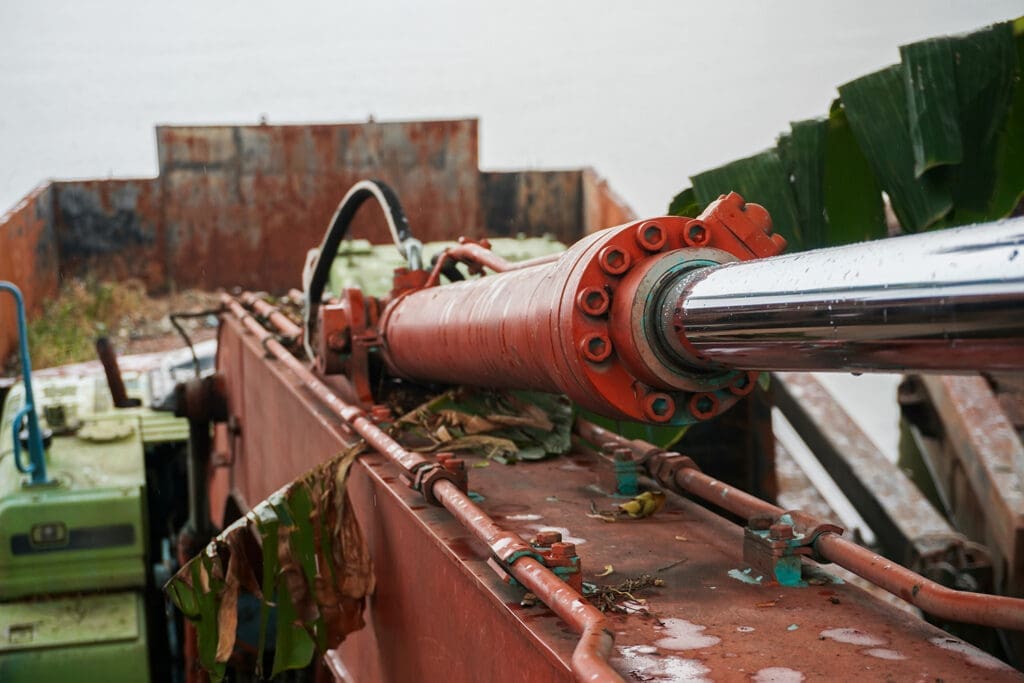
If you are seeing rough spots, rust-colored staining, or cratered surfaces on a hard chrome component, you are likely dealing with pitted chrome. What starts as a minor surface issue can escalate into a component failure, and if you are not sure what you are looking at, it is easy to underestimate the damage until it becomes a production problem.
This guide breaks down what causes chrome pitting, how to identify the stages before they get out of hand, and how to determine whether your part needs a repair, a full replate, or something else entirely.
What Is Chrome Pitting?
Chrome pitting refers to the formation of small craters or voids in the surface of a hard chrome-plated component. It happens when microcracks in the deposited layer of chromium allow moisture, contaminants, or corrosive agents to penetrate beneath the surface. Once that barrier is compromised, the base metal becomes exposed, and deterioration begins from the inside out.
This is not a cosmetic issue. On industrial components, chrome pitting directly affects sealing performance, dimensional integrity, and service life. If your equipment operates in a demanding environment, such as a hydraulic press, a hot mill, or a heavy construction machine, a pitted surface is a liability you cannot afford to ignore.
What Causes Chrome Pitting?
Understanding the root cause matters because the same conditions that created the pitting can damage a new plate if they are not corrected first.
Flaws in the Original Chrome Plating Process
Every chrome plating process produces some degree of microcracking in the hardened surface. In industrial hard chrome, that is expected and manageable. However, if the chrome plating process was not executed correctly, including proper current density, temperature control, surface preparation, and electrolytic bath chemistry, porosity increases. That gives moisture and contaminants a direct path to the base metal, and chrome deterioration begins well before it should.
Corrosive and Demanding Operating Environments
Hard chrome is valued for its corrosion resistance, but it is not impervious to every condition. Exposure to acids, hydraulic fluids, saltwater environments, and high-temperature cycling can all wear down the surface layer over time. Industries like quarrying, agriculture, and construction put components through demanding cycles, and without routine maintenance, that accelerates chrome plating wear significantly.
Mechanical Damage and Surface Stress
Impact, abrasion, and improper handling can initiate cracks in the surface. Chromium plating is hard but relatively brittle, which means high-impact contact or side-loading is a common starting point for surface breakdown. In firearms manufacturing, tight tolerances on barrel and bore components mean even minor surface inconsistencies have direct functional consequences.
Poor Substrate Preparation Before Plating
If the base metal had existing porosity, inclusions, or surface contamination before plating, those defects can telegraph through the chrome. Proper surface preparation before entering the electrolytic bath is not optional. No amount of plating thickness corrects a bad foundation.
Does Chrome-Plated Metal Rust?
This is one of the most common questions about hard chrome, and the answer surprises some people. Does chrome-plated metal rust? The chrome itself does not rust, but the base metal beneath it absolutely can. Hard chrome provides strong corrosion resistance as long as the surface remains intact. Once pitting opens a path through the layer of chromium to the substrate, oxidation sets in quickly. You will typically see it as a reddish-brown staining bleeding outward from the pit sites.
This is why early identification matters. The rust you are seeing is not a surface problem. It is a sign that the base metal is already being compromised.
How Long Does Chrome Last?
How long chrome lasts depends on several factors: operating environment, application type, plating thickness, and how consistently the equipment is maintained. In a controlled industrial setting, properly applied hard chrome on hydraulic cylinder rods, mill rolls, or heavy equipment components can deliver years of reliable performance. In high-abrasion or chemically aggressive environments without routine inspection, chrome deterioration can begin within months.
Wear resistance is one of the primary reasons industrial operators specify hard chrome in the first place. But that protection is only as good as the original application and the conditions it operates under. If your component has been in service for a while without a formal inspection, it is worth taking a closer look before a failure forces the issue.
The Stages of Chrome Deterioration
Catching chrome plating wear early gives you more options and lower repair costs. Here is what to look for at each stage.
Stage 1: Surface Oxidation
You may notice light discoloration or faint staining, but no visible surface damage yet. The chrome is still intact, but oxidation is beginning to develop beneath the surface. This is the easiest stage to address.
Stage 2: Pit Formation
Small craters become visible on the surface. Sealing performance may begin to degrade. At this stage, a strip-and-replate is often still a straightforward process, and the base metal is typically still within tolerance.
Stage 3: Base Metal Exposure
The pitting has progressed through the chrome to the substrate. Rust is visible and spreading from the pit sites. The component may already be out of tolerance or failing to seal properly. A dimensional assessment is necessary before replating is viable, and a rebuild may be required.
How to Assess Your Part: A Practical Decision Checklist
Use this to evaluate where your component stands before requesting a quote.
- Surface shows light staining but no visible pit depth: schedule an inspection and monitor the part closely.
- Pitting is visible, but base metal is not yet exposed: likely a strong candidate for strip and rechrome.
- Rust staining is bleeding outward from pit sites: base metal exposure is confirmed, a dimensional check is needed.
- Component is out of tolerance or failing to seal: a rebuild or remachine step may be required before replating.
- Plating history or original specification is unknown: bring it in for a professional evaluation before making any decisions.
Knowing when to rechrome comes down to how far the damage has progressed and whether the base metal is still within a workable range. Hard Chrome Specialists can assess that directly and recommend the right path forward before any work begins.
Why Industrial Hard Chrome Is Not the Same as Decorative Chrome Plating
It is worth stating clearly: industrial hard chrome and decorative chrome plating are not the same process, and they are not interchangeable. Decorative chrome plating is applied in thin layers for appearance. Industrial hard chrome is engineered for performance, applied to precise thickness specifications, and built to hold up under load, pressure, friction, and environmental exposure.
If your vendor does not understand that distinction, the replate will not perform the way your operation requires.
Ready to Find Out If Your Part Can Be Rechromed?
If you are looking at a component with visible pitting, rust staining, or signs of chrome deterioration, do not wait for a seal failure or a line stoppage to take action.
Hard Chrome Specialists has been handling industrial replate and repair work since 1988. As an ISO 9001-registered facility, we hold consistent standards across every job, whether it is a single hydraulic rod or a batch of mill components. Our technical specialists evaluate each part individually and recommend only what the component actually needs.
With fast turnaround and full in-house capabilities, we can assess your part and get it back in service without the lead time you would face sourcing a replacement. If you are weighing repair against replacement, we can give you a clear answer based on what we see, not a sales pitch.